They’re Not ‘In Love,’ Denver Zoo Says As Petition To Keep Polar Bears Together Gains Support

why-animals-do-the-thing:

Here’s a fun misinformation campaign going on about the Denver Zoo’s announced polar bear moves, courtesy of a misunderstanding of polar bear behavior PETA perpetuated last spring. 

In mid-October, the Denver Zoo announced that their two resident polar bears, Cranbeary and Lee, would be moving to other AZA-accredited institutions. This reasons for this move are two-fold: to facilitate the Species Survival Plan conservation breeding program for polar bears, and so that Denver can begin work on remodeling their bear habitats. The polar bear population within American zoos is very small – only 44 animals – and has a lot of older individuals, so it’s really important for the sustainability of that program that bears of reproductive age are with partners with whom they’re producing cubs. Cranbeary and Lee have both been at Denver for six years, but have never had cubs – so they’ve been paired up with bears at other facilities with whom they’re a good genetic match. After their departure, the polar bear exhibit will be home to the zoo’s grizzly bears while funds are raised for the construction of a new, modern polar bear habitat. 

As soon as this move was announced, a petition showed up on Care2 (a non-profit petition platform that helps animal rights campaigns with their media strategies, and makes money by selling the contact information of petition signers to various groups – including PETA) saying that splitting up the bears was immoral… because they were in love. What’s more, that petition demanded that the bears be removed from the zoo population and sent to a sanctuary to live out their lives in each other’s company. But there’s a problem with that: polar bears are solitary, and Cranbeary and Lee are not “bonded.” Polar bears are naturally only social with other adult members of their species during the breeding season – maybe a month out of each year. The cute photos that populate the Care2 petition, as well as news releases about the move, were all taken during that short window. Just as the bears wouldn’t want to be near each other the rest of the time if they were in the wild, the zoo manages them as solitary animals and gives them space from each other the rest of the year. Denver zoo’s director of communications also noted publicly that the bears aren’t even getting along for the full breeding season: “Cranbeary has been losing interest in Lee even before that period ends, Kubie [said], noting that she ‘starts getting pretty agitated with Lee.’” 

So where did this idea of “bonded” polar bears in zoos come from? It was certainly popularized in April of last year, when a polar bear at SeaWorld Orlando died shortly after the zoo’s other female polar bear was transferred to another facility for breeding purposes. PETA’s vice president made public comment that the solitary female polar bear remaining at SeaWorld had lost all hope, given up, and died “of a broken heart.” This pseudo-scientific interpretation was then repeated internationally by news sources, and only a few bothered to include the AZA’s statement on the incident – none of them actually interviewed wild polar bear researchers to ascertain if there was any veracity to the claim. Some of it might be due to history, too –  for a long time it was common practice in American zoos to house adult polar bears together year round – until research started indicating that they were avoiding each other, and would prefer to be more solitary except during breeding seasons.

Because of the Care2 petition and all of the other animal liberation organizations voices that have boosted their message, there are now hundreds of thousands of people who believe that naturally solitary bears maintain emotional “friendships” with each other similar to those of humans. They’ve been convinced that sending these two polar bears to a sanctuary to “keep them together forever” is better for their welfare than keeping them within an accredited zoo program. There’s actually no information in the short petition about the behavioral, medical, and physiological needs of polar bears in human care, and how a sanctuary would be able to fulfill them better than an AZA-accredited zoo. (Instead, it repeats claims about stereotypical behavior and ignores the body of published, peer-reviewed research by the zoo world that informs polar bear habitat design and management programs.) they’d b

here’s no sanctuary specified in the petition, probably because it’s hard to tell if there’s a sanctuary in the United States would be able to provide an appropriate habitat or care for for polar bears. Given that Care2 is openly and frequently anti-zoo, it’s much more likely that this petition was created with the intention of further increasing anti-zoo sentiments among the public (when the zoo chooses not to remove genetically valuable animal from a conservation breeding program and send them to facilities whose quality of care it cannot guarantee) rather than actually improve the welfare of Cranbeary and Lee. 

TL;DR Animal rights groups and the petition sites that support them are spreading incorrect information about bears to further their anti-zoo agenda and to try to remove animals from zoo conservation breeding programs. 

They’re Not ‘In Love,’ Denver Zoo Says As Petition To Keep Polar Bears Together Gains Support

terefah:

here are all the links

https://jfrej.org/understanding-antisemitism/

https://newjewishagenda.files.wordpress.com/2015/10/the-past.pdf

https://www.politicalresearch.org/2017/06/29/skin-in-the-game-how-antisemitism-animates-white-nationalism/

https://jewishcurrents.org/essay/the-soros-myth/

https://everydayfeminism.com/2017/12/stronger-by-resisting-antisemitism/

https://m.facebook.com/100000475997274/posts/2058961167463063/

https://m.facebook.com/517931451/posts/10154917807541452/

https://jewschool.com/2016/11/78215/anti-semitism-in-the-trump-era-what-i-learned-growing-up-in-rural-america/

https://archive.nytimes.com/www.nytimes.com/books/98/03/29/specials/baldwin-antisem.html

https://forward.com/opinion/407988/one-year-after-charlottesville-black-jewish-solidarity-is-more-important/

https://twitter.com/egsophie/status/925910663406473217?s=21

https://twitter.com/ibjiyongi/status/972827846556241920?s=21

https://forward.com/opinion/national/390486/as-an-arab-jew-i-am-exposed-to-anti-semitism-from-the-right-and-the-left/

https://www.washingtonpost.com/outlook/2018/10/24/conspiracy-theories-about-soros-arent-just-false-theyre-anti-semitic/

thebibliosphere:

blood-on-my-french-fries:

suzie-guru:

freekicks:

pyrrhiccomedy:

pyrrhiccomedy:

The famous La Marseillaise scene from Casablanca.

You know, this scene is so powerful to me that sometimes I forget that not everyone who watches it will understand its significance, or will have seen Casablanca. So, because this scene means so much to me, I hope it’s okay if I take a minute to explain what’s going on here for anyone who’s feeling left out.

Casablanca takes place in, well, Casablanca, the largest city in (neutral) Morocco in 1941, at Rick’s American Cafe (Rick is Humphrey Bogart’s character you see there). In 1941, America was also still neutral, and Rick’s establishment is open to everyone: Nazi German officials, officials from Vichy (occupied) France, and refugees from all across Europe desperate to escape the German war engine. A neutral cafe in a netural country is probably the only place you’d have seen a cross-section like this in 1941, only six months after the fall of France.

So, the scene opens with Rick arguing with Laszlo, who is a Czech Resistance fighter fleeing from the Nazis (if you’re wondering what they’re arguing about: Rick has illegal transit papers which would allow Laszlo and his wife, Ilsa, to escape to America, so he could continue raising support against the Germans. Rick refuses to sell because he’s in love with Laszlo’s wife). They’re interrupted by that cadre of German officers singing Die Wacht am Rhein: a German patriotic hymn which was adopted with great verve by the Nazi regime, and which is particularly steeped in anti-French history. This depresses the hell out of everybody at the club, and infuriates Laszlo, who storms downstairs and orders the house band to play La Marseillaise: the national anthem of France.

Wait, but when I say “it’s the national anthem of France,” I don’t want you to think of your national anthem, okay? Wherever you’re from. Because France’s anthem isn’t talking about some glorious long-ago battle, or France’s beautiful hills and countrysides. La Marseillaise is FUCKING BRUTAL. Here’s a translation of what they’re singing:

Arise, children of the Fatherland! The day of glory has arrived! Against us, tyranny raises its bloody banner. Do you hear, in the countryside, the roar of those ferocious soldiers? They’re coming to your land to cut the throats of your women and children!

To arms, citizens! Form your battalions! Let’s march, let’s march! Let their impure blood water our fields!

BRUTAL, like I said. DEFIANT, in these circumstances. And the entire cafe stands up and sings it passionately, drowning out the Germans. The Germans who are, in 1941, still terrifyingly ascendant, and seemingly invincible.

“Vive la France! Vive la France!” the crowd cries when it’s over. France has already been defeated, the German war machine roars on, and the people still refuse to give up hope.

But here’s the real kicker, for me: Casablanca came out in 1942. None of this was ‘history’ to the people who first saw it. Real refugees from the Nazis, afraid for their lives, watched this movie and took heart. These were current events when this aired. Victory over Germany was still far from certain. The hope it gave to people then was as desperately needed as it has been at any time in history.

God I love this scene.

not only did refugees see this movie, real refugees made this movie. most of the european cast members wound up in hollywood after fleeing the nazis and wound up. 

paul heinreid, who played laszlo the resistance leader, was a famous austrian actor; he was so anti-hitler that he was named an enemy of the reich. ugarte, the petty thief who stole the illegal transit papers laszlo and victor are arguing about? was played by peter lorre, a jewish refugee. carl, the head waiter? played by s.z. sakall, a hungarian-jew whose three sisters died in the holocaust

even the main nazi character was played by a german refugee: conrad veidt, who starred in one of the first sympathetic films about gay men and who fled the nazis with his jewish wife. 

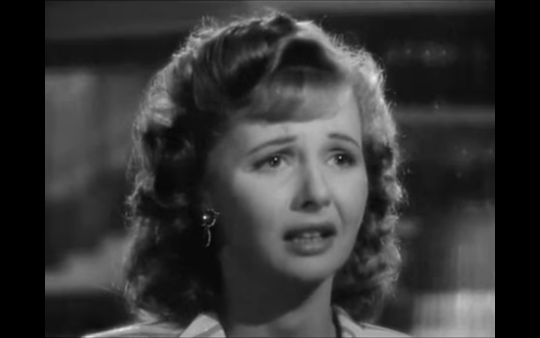
there’s one person in this scene that deserves special mention. did you notice the woman at the bar, on the verge of tears as she belts out la marseillaise? she’s yvonne, rick’s ex-girlfriend in the film. in real life, the actress’s name is madeleine lebeau and she basically lived the plot of this film: she and her jewish husband fled paris ahead of the germans in 1940. her husband, macel dalio, is also in the film, playing the guy working the roulette table. after they occupied paris, the nazis used his face on posters to represent a “typical jew.” madeleine and  marcel managed to get to lisbon (the goal of all the characters in casablanca), and boarded a ship to the americas… but then they were stranded for two months when it turned out their visa papers were forgeries. they eventually entered the US after securing temporary canadian visas. marcel dalio’s entire family died in concentration camps. 

go back and rewatch the clip. watch madeleine lebeau’s face.

image
image
image

casablanca is a classic, full of classic acting performances. but in this moment, madeleine lebeau isn’t acting. this isn’t yvonne the jilted lover onscreen. this is madeleine lebeau, singing “la marseillaise” after she and her husband fled france for their lives. this is a real-life refugee, her real agony and loss and hope and resilience, preserved in the midst of one of the greatest films of all time. 

I remember when I first saw Casablanca, and being struck by this scene, and that was without knowing the history behind it or all that Madeleine Lebeau – and so many more refugees- had suffered. 

Do yourself a solid and watch this film. Watch this scene. And most of all, remember refugees, the ones who lived then and especially the ones who live now.  

I knew this movie, of course, it’s one of the mains from my mother’s list of movies you should see “At least once in a lifetime”, but I had never until now felt any desire to watch it.

It’s one of those movies where context and the (not so quite) subtle subtext are vitally important to understanding the importance of it, not only as a classic piece of film making (hokey old timey speech and all), but as a political and social commentary of the times, rooted fiercely in protest and a whole lot of “fuck you fascists”.

I never really got it until my father (raised by his Jewish grandmother who fled Austria with the clothes on her back and a single suitcase and swathes of dead loved ones left behind) sat me down and told me the full context of when the movie was made, what it was actually about and who it was made for.

It made his casual way of saying “here’s looking at you kid” whenever we skipped school to go to protest rallies (start of the Iraq war) all the more poignant for me. I just thought he was being an old man quoting the popular cult media from his youth. But it means so much more than that.

Cause here’s the thing about that iconic line from the end of the movie: you’ll find screeds and screeds of people talking about how he’s using it to flirt with her once last time and just how suave it is, alluding that it’s purely about her youth and beauty and his ever lasting love for her even though she’s married to someone else.

But that line? Had been in use for a good 50+ years prior to Casablanca gracing the screens. It’s a toast, a wish for your health. And the people watching would have known the significance of it, particularly the displaced Europeans knowing that they’ll likely never see their loved ones again.

Cause here’s looking at you kid– and the unspoken meaning behind it– one last time.

Rick isn’t just letting go of the love of his life in that scene. He’s using his position of power and privilege as an American with access to outside networks (predominantly crime related, but hey) to help her escape the country with her highly persecuted and sought after husband to a place of safety.

He had the option to just take her himself and run– and her husband even urges him to do so at one point. But Rick endeavors to get them both to safety, and he shows up armed to do so. He fights for their freedom even though he doesn’t have to. He goes from staunchly refusing to help them out of bitterness and cynicism, to realizing that if he doesn’t do something people are going to die. And he doesn’t just save the woman he loves, which would be oh so easy. He saves the man he hates too. Because he can, so he must.

The final scene ends with Renault (played by Claude Rains, an Englishman), head of the local police (and a character largely played for laughs), making the decision not to arrest Rick or anyone else involved when ordered to, actively defying the orders of a fascist. When he and Rick are walking away, he insinuates that he and Rick should join the French Resistance movement in
Brazzaville, and Rick again delivers the other iconic line from the movie: “Louis, I think this is the beginning of a beautiful friendship.”

Casablanca is about forging alliances in the face of tyranny. It’s about doing what is right, even though it goes against the law when the law is corrupt. It’s about being willing to give up your own liberties and comfort to preserve the things you love, even though it won’t directly benefit you. Hell, it might even kill you. But someone’s got to do it.

And yea, it’s old, it’s dated and a product of it’s time and it shows. There are times when the modern viewer will cringe and rightly so. But it was also incredibly out there for its time, when the world was going to absolute hell in a hand basket and it seemed like the walls were closing in, it held many important messages, but primarily: Resist.

So here’s looking at you, kids.

biheather-birebecca-lezvalencia:

beatrice-otter:

#i feel like this is also the stance of the movies#because lando spends approximately zero seconds redeeming himself#think of how black characters are usually treated for betrayals#even if it is an airquote betrayal#lando helps at the end of esb and is officially one of the heroes no redemption necessary#the whole choking thing is a misunderstanding really
tags via cadesama

#also note how Leia forgave him #real fast#this is a woman who does not do forgiveness easily #but she knew he was right#she was fully aware of that #she was angry because she loves Han#but she moved past it #because she knew he was right#the movie knows he’s right #the characters know he’s right#it isn’t even a question

pvstelheart:

lovecarriemost:

vuittonable:

Will Smith went to London and dressed up as a Boots sales assistant to promote Jaden’s new water brand ….. what dimension are we living in

“Brand of water” look at our society, we need a good old fashioned culling.

The kid is just doing what he wants to better the world. He started a brand of bottled water that’s better for the environment and is responsibly sourcing everything from the bottle to the water. They’ve gone as far to work with a specific city and only bottle excess water and pay the city more than its actually worth so their water infrastructure can be improved. He’s also donating water to Flint until the lead levels are actually at safe levels because the government decided they don’t want to anymore.

If you’re gonna try to complain about a celebrity doing something at least be educated on what they’re actually doing first

val-ritz:

aaronsmithtumbler:

Older forms of English kept Latin’s gender-specific suffixes -tor and -trix;  tor is for men and trix is for women. So a male pilot is an aviator, a female pilot is an aviatrix. A male fighter is a gladiator, a female fighter is a gladiatrix.

This contrasts with the modern system, where tor is for both men and women, and trix are for kids.

YOU COME INTO MY HOUSE

renniequeer:

renniequeer:

My dad: “So if your pronouns are they and them, how should I refer to you when I brag about you? My daughter? My son?”

Me: “Mom’s just been calling me her kid or her child.”

My dad: “I shall call you…my Eldest Spawn.”

I feel like it’s worth noting that he was wearing a Cthulu t-shirt when this happened.