Abstinence-only-until-marriage
programs are statistically ineffective.
Studies show they reinforce gender
stereotypes, undermine public health
programs, violate adolescent human
rights by withholding accurate medical
information, and they don’t actually
delay sexual activity. SourceSource 2
Games often overestimate how much a sword or an axe weighs, and the assumption that many people make is that this lump of steel in your hand is a great burden, although this assumption has been working is way out.
The simple fact of the matter is, medieval weapons are quite light.
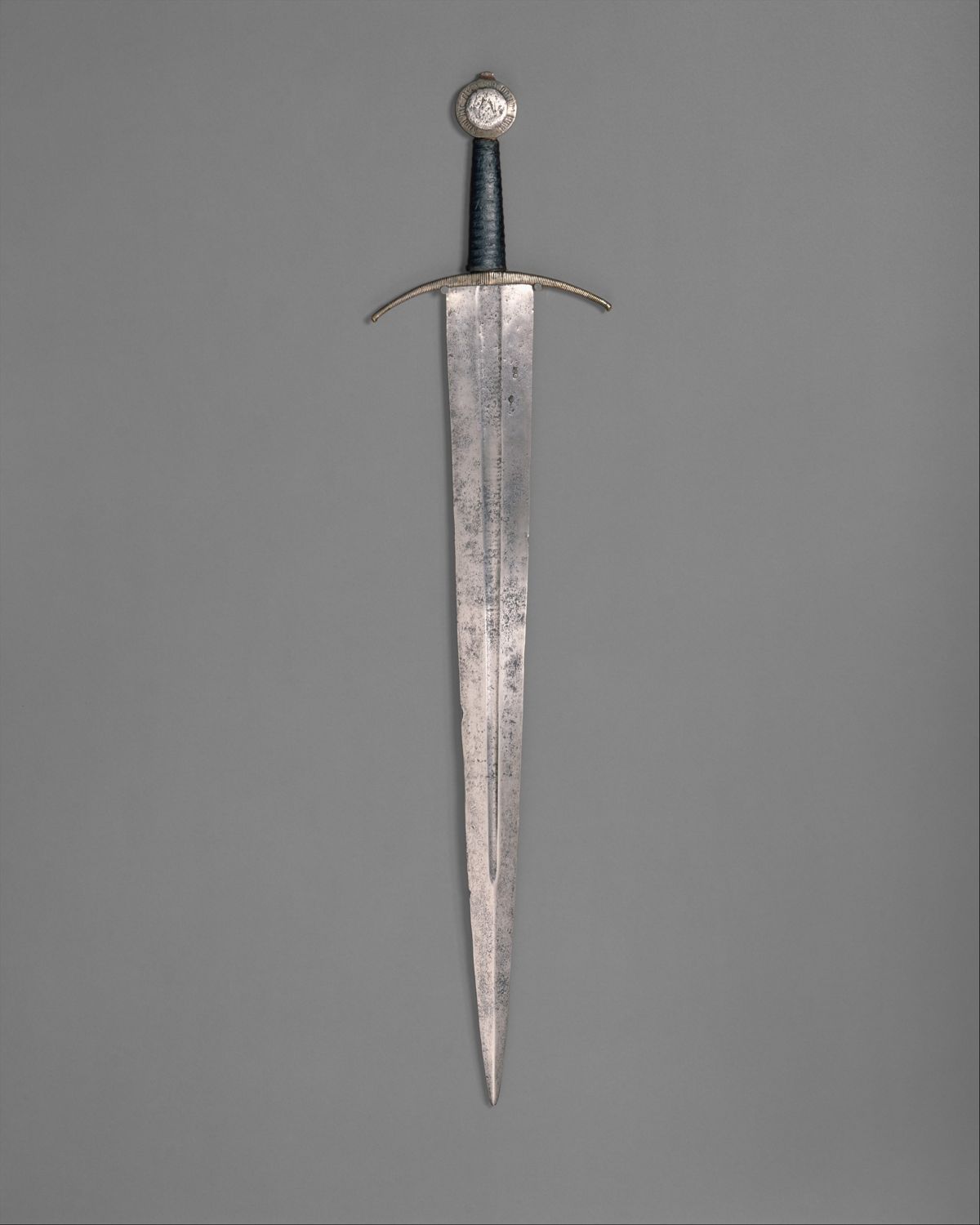
The medieval Arming Sword, the single most common sword of the middle ages. One handed, ext to carry, you wouldn’t expect this one to be that heavy, and it isn’t. Arming Swords tend to weigh between 3 and 4 pounds / 1⅓ and 1.8kg, that’s it! This particular example weighs 3 lbs. 11 oz / 1.6kg.
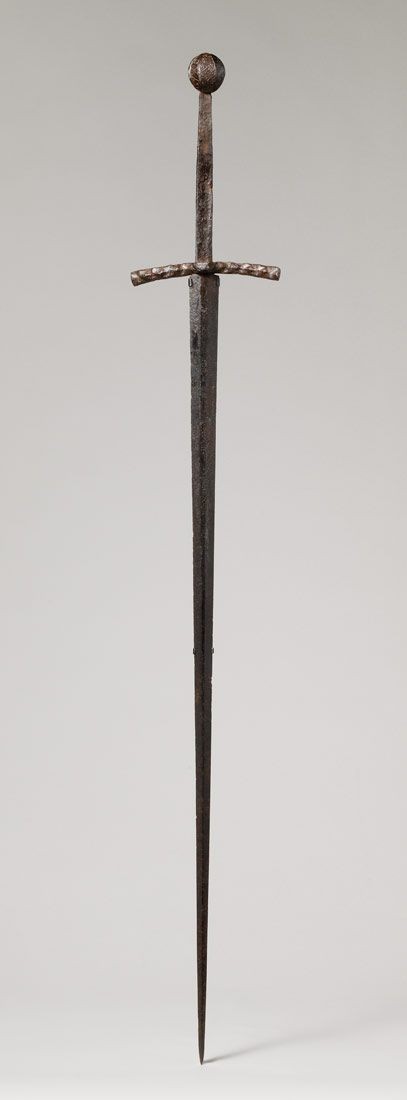
The Longsword, a much longer weapon than the Arming Sword, as the name implies, and obviously much heavier. But it’s not.
Standard Longswords, especially later period ones designed more for thrusting (like the one pictured above,) can be shockingly light. They can weigh in the same range as arming swords, although they can weigh more as well.
Longswords tend to sit between 3 and 5 pounds / 1⅓ and 2.25kg, and this example is 3 lbs. 7oz. / 1.5kg meaning it weighs less than the Arming Sword pictured before!
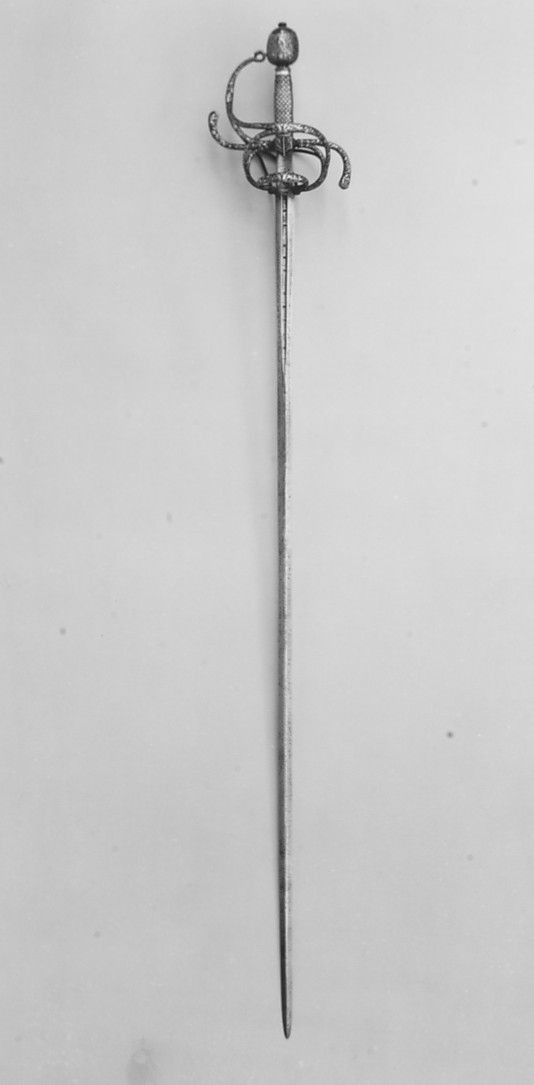
The Rapier, a famously light and nimble weapon that is also clouded in a fog of incorrect assumptions. The rapier is a long weapon. This example measures 45 inches in the blade and isn’t even among the longest I’ve seen.
Including all that weight from the steel basket around your hand, and it starts to add up. Rapiers can however be quite light, so including the extremes of the spectrum you end up with a range of between 2.5 pounds and 5 pounds / 1.1 and 2.25kg. This particular example is on the lighter side, weighing 2 lbs. 13 oz / 1.3kg.
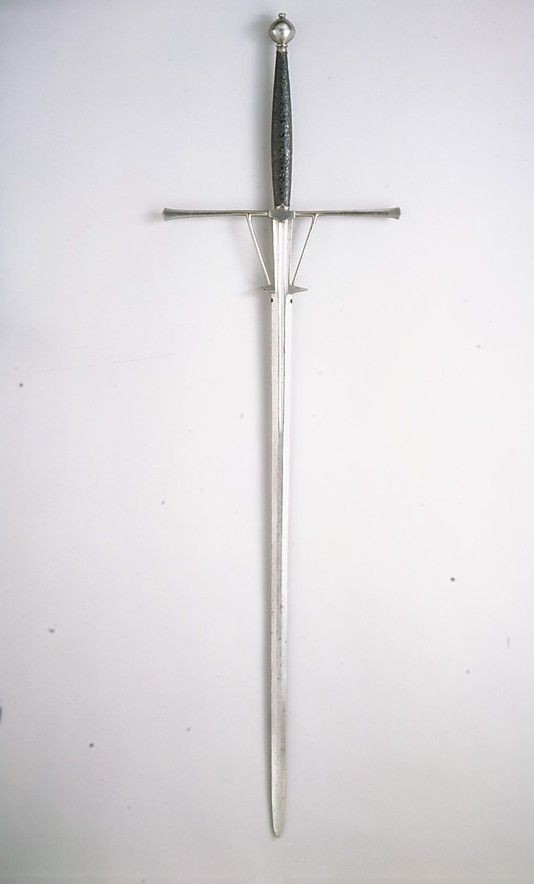
The Zweihander, the famous greatsword, surely this is a much heavier weapons! Well of course it’s heavier than the others, the entire thing is five and a half feet tall, however they are deceptively light.
Zweihander weigh, on average, 6 pounds / 2.7kg. That’s it, only 6 pounds. Some on the heavier side weigh about 7lbs / 3.1kg, but they rarely exceed that. This example weighs 6 lbs. 2 oz. / 2.8kg.
Moving away from swords, axes will surely be heavier, won’t they? Think again.
There is an important distinction between battle axes and wood cutting axes. Battle Axe heads tend to be thin, very thin, good for cutting flesh and bone, and easier to wield. Wood cutting heads are wider so as to be more robust, and split wood open more efficiently, and let’s not even talk about splitting mauls.
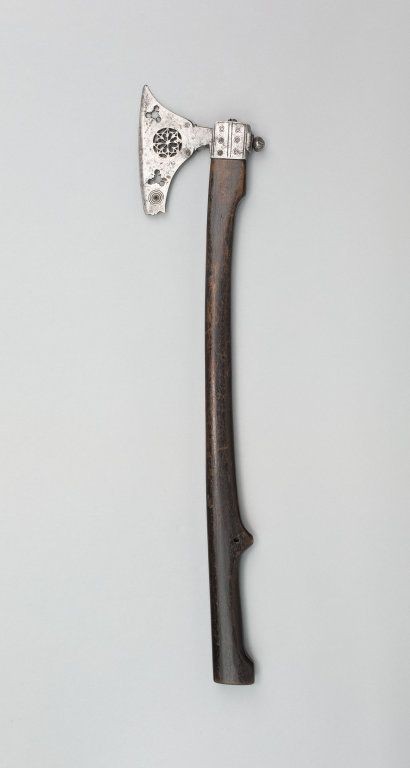
As such, one handed battle aces like this tend only to weigh between 1 and 4 pounds / 0.45 and 1.8kg. They can be very very light! The example is 1 lb. 7 oz. / 0.65kg.
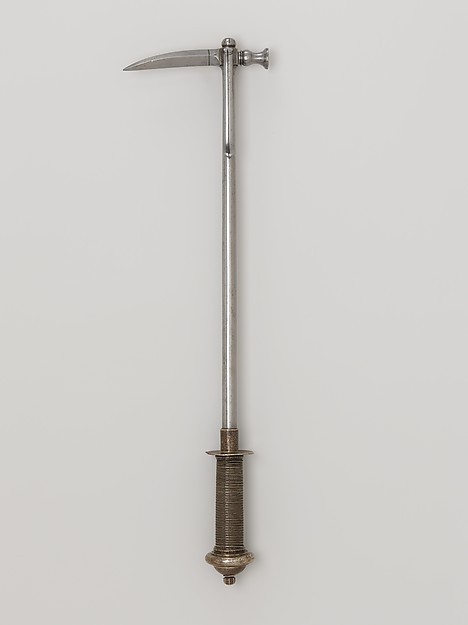
Warhammer even tend to stick to that same range, between 1 and 4 pounds / 0.45 and 1.80. This example is 2 lbs. 8 oz / 1.15kg.
It’s only once you reach polearms that you begin getting heavier weights. The weights of a polearm is greatly changed by the length of it’s shaft, which can vary greatly, so these numbers will be somewhat more flexible.
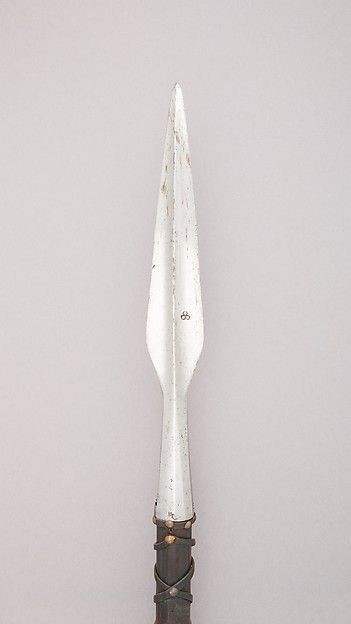
Spears tend to be the lightest polearms, often weighing between 3 and 6 pounds / 1.⅓ and 2.7kg, with this example coming in at 4 lbs. even / 1.8kg.
Poleaxes, tending to be on the shorter end of polearms, also tend to be lighter. Interestingly, the examples I’ve seen are quite consistent, and all weigh between 6 and 7 pounds / 2.7 and 3.175kg, though greater variation is possible. This example weighs 6 lbs. 9 oz / 3kg.
Halberds tend to be even heavier, though examples in museums tend to have hafts that are too short simply for storage and display purposes.
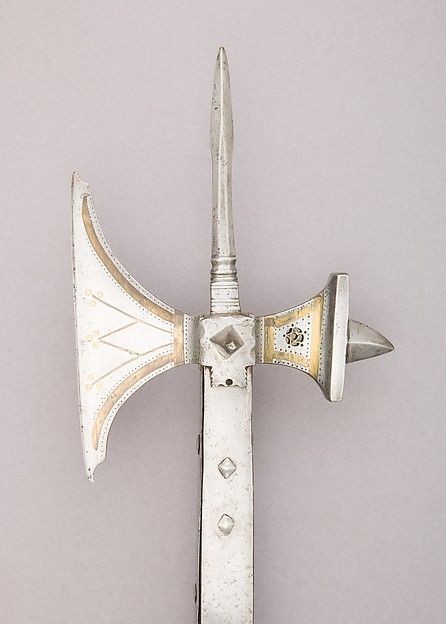
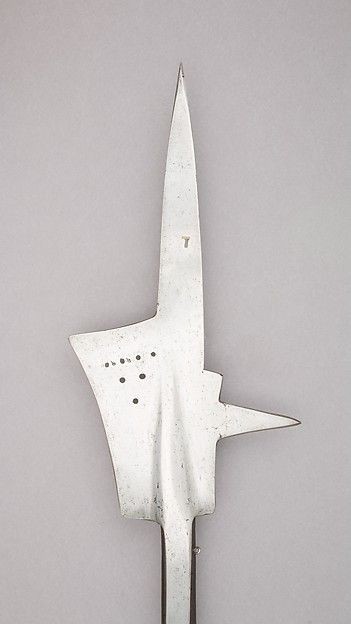
As such, the weights tend to be somewhat off, however we know from period sources and good modern reproductions that properly sized balberds tend to be about 8 pounds. This museum piece fits the “too light” mould, and weighs 5 lbs. 10 oz / 2.5kg.
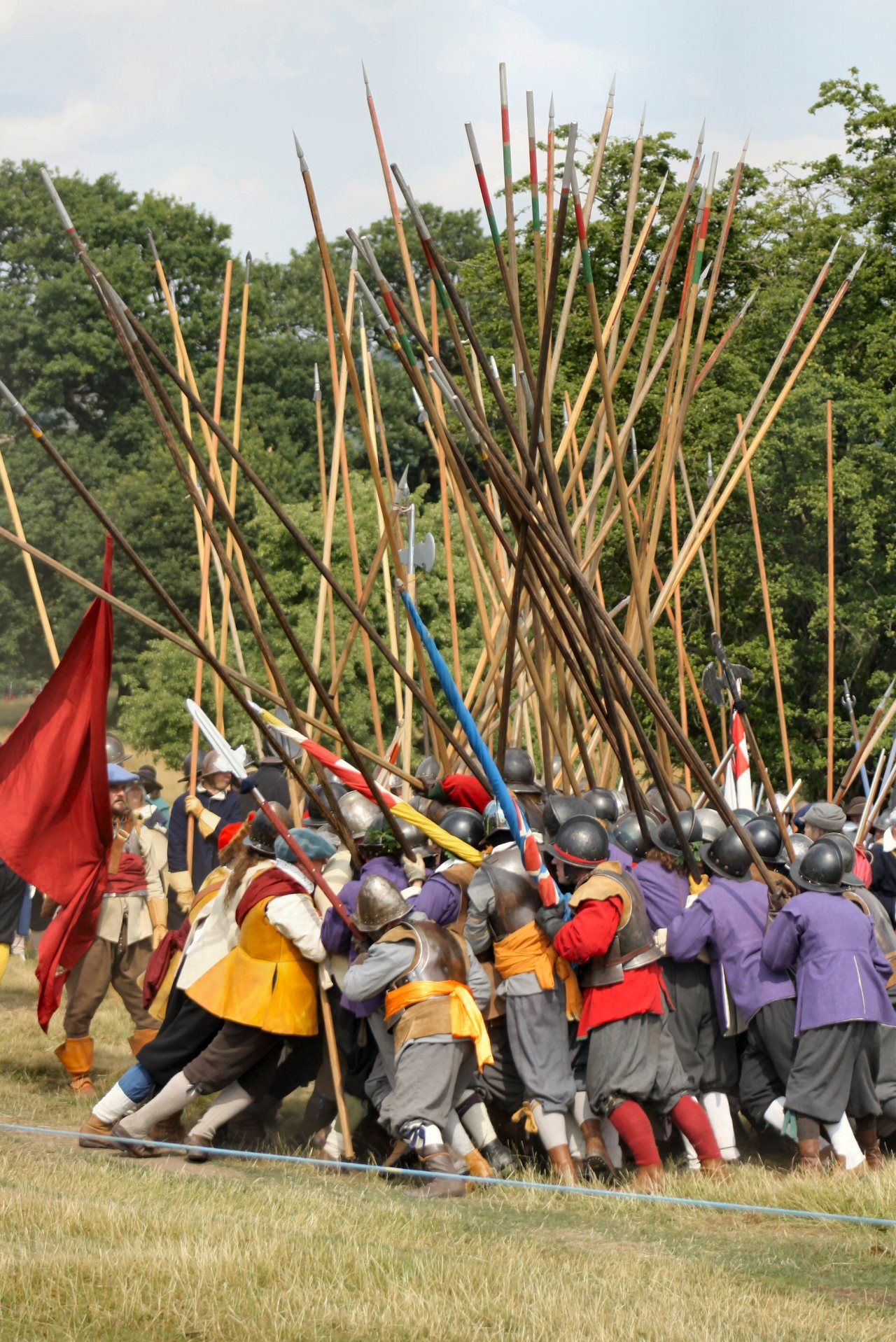
For the purposes of giving you (the reader) a proper appreciation of what the pike is, I elected to not use a museum photo for this one, so you can see their full scale.
The pike is a massive weapon, and these piles being used by reenactors in this photo are quite short. On the shorter end, they measured over 10 feet / 3m in length, and on the lookout get end occasionally hit 30 feet / 9.1m !
These could be the heaviest melee weapons typically used in medieval/renaissance warfare, and even these only weigh between 5 and 13 pounds / 2.25 and 5.9kg.
With your heaviest weapons only weighing 13 pounds at their most extreme, this paints a good picture of how light these hand weapons tended to be. Something for RPG and video game developers to keep in mind in the future.
People always gloss over how mentally damaging it can be to work in retail. I fucking hate that whenever I say “I could never work in retail again” someone has to reply “You snowflake millennials can’t take a starter job because you have to INTERACT with other people” No. Fuck you. I’ve worked as a planetarium host. I’ve worked as a public speaker. I’ve worked as a tutor and as a student teacher. I can work with people. I can work with crowds. Retail was fucking different. Retail was being treated as a subhuman. Retail was being treated so poorly that you have anxiety attacks before work. Having to work retail was a factor in my last suicide attempt. If I hear you say one fucking word about retail workers playing the victim I will personally break every bone in your body. Fuck You.
The holidays are coming up. Retail workers are going to be spiraling into a nightmare beyond human comprehension. If you’ve worked retail, you know this. If you haven’t, be aware of it. Please be kind to every retail worker you come across. Please be patient and understanding. It is misery out there.
1600s: most witch-hunts ended in this century. no witches were burned in North America; they were hanged or in one case pressed to death
1700s: the American Revolution. Marie Antoinette. the French Revolution. the crazy King George. most pirate movies
1800-1830: Jane Austen! Pride and Prejudice! those dresses where the waist is right under one’s boobs and men have a crapton of facial hair inside high collars
1830-1900: Victorian. Les Miserables is at the beginning, the Civil War is in the middle, and Dracula is at the end
1900-1920: Edwardian. Titanic, World War I, the Samantha books from American Girl, Art Nouveau
1920s: Great Gatsby. Jazz Age. Flappers and all that. most people get this right but IT IS NOT VICTORIAN. STUFF FROM THIS ERA IS NOT VICTORIAN. DO NOT CALL IT VICTORIAN OR LIST IT ON EBAY AS VICTORIAN. THAT HAPPENS SURPRISINGLY OFTEN GIVEN HOW STAGGERING THE VISUAL DIFFERENCE BETWEEN ERAS IS. also not 100 years ago yet, glamour.com “100 years of X” videos. you’re lazy, glamour.com. you’re lazy and I demand my late Edwardian styles
I just saw people referencing witch burning and Marie Antoinette on a post about something happening in 1878. 1878. when there were like trains and flush toilets and early plastic and stuff. if you guys learn nothing else about history, you should at least have vague mental images for each era
“Les Miserables is at the beginning, the Civil War is in the middle, and Dracula is at the end” sounds like the longest weirdest worst movie I’d pay to see in theatres five times.
I don’t get why people hate immigrants so much… Like they’re literally just… People… From another location….
My partner is an immigrant from the UK and still holds his citizenship. At a recent event, an acquaintance talked about how many “immigrants” get jobs over “Canadians” and they shouldn’t allowed to be management (which my partner is). My partner reaches across the table and goes “Hi, immigrant here!” and she goes “Oh I didn’t mean immigrants like you…” And you can so tell they just mean “brown people” or “Asian people” but they pretend it’s about jobs and shit.
That’s the same with my family. We were war immigrants from the soviet union and now live in Germany. Now the syrians are here because they also have war, and people keep asking me why I’m defending them so mercilessly. And when I tell them that my family (that is still alive) has gone through the same bullshit. But they insist that both scenarios are completely different. They’re not different, you’re just racist.
I have had this on my mind for days, someone please help:
Why are dogs dogs?
I mean, how do we see a pug and then a husky and understand that both are dogs? I’m pretty sure I’ve never seen a picture of a breed of dog I hadn’t seen before and wondered what animal it was.
Do you want the Big Answer or the Small Answers cos I have a feeling this is about to get Intense
Oooh okay are YOU gonna answer this, hang on I need to get some snacks and make sure the phone is off.
The short answer is “because they’re statistically unlikely to be anything else.”
The long question is “given the extreme diversity of morphology in dogs, with many subsets of ‘dogs’ bearing no visual resemblance to each other, how am I able to intuit that they belong to the ‘dog’ set just by looking?”
The reason that this is a Good Big Question is because we are broadly used to categorising Things as related based on resemblances. Then everyone realized about genes and evolution and so on, and so now we have Fun Facts like “elephants are ACTUALLY closely related to rock hyraxes!! Even though they look nothing alike!!”
These Fun Facts are appealing because they’re not intuitive. So why is dog-sorting intuitive?
Well, because if you eliminate all the other possibilities, most dogs are dogs.
To process Things – whether animals, words, situations or experiences – our brains categorise the most important things about them, and then compare these to our memory banks. If we’ve experienced the same thing before – whether first-hand or through a story – then we know what’s happening, and we proceed accordingly.
If the New Thing is completely New, then the brain pings up a bunch of question marks, shunts into a different track, counts up all the Similar Traits, and assigns it a provisional category based on its similarity to other Things. We then experience the Thing, exploring it further, and gaining new knowledge. Our brain then categorises the New Thing based on the knowledge and traits. That is how humans experience the universe. We do our best, and we generally do it well.
This is the basis of stereotyping. It underlies some of our worst behaviours (racism), some of our most challenging problems (trauma), helps us survive (stories) and sharing the ability with things that don’t have it leads to some of our most whimsical creations (artificial intelligence.)
In fact, one reason that humans are so wonderfully successful is that we can effectively gain knowledge from experiences without having experienced them personally! You don’t have to eat all the berries to find the poisonous ones. You can just remember stories and descriptions of berries, and compare those to the ones you’ve just discovered. You can benefit from memories that aren’t your own!
On the other hand, if you had a terribly traumatic experience involving, say, an eagle, then your brain will try to protect you in every way possible from a similar experience. If you collect too many traumatic experiences with eagles, then your brain will not enjoy eagle-shaped New Things. In fact, if New Things match up to too many eagle-like categories, such as
* pointy * Specific!! Squawking noise!! * The hot Glare of the Yellow Eye * Patriotism?!? * CLAWS VERY BAD VERY BAD
Then the brain may shunt the train of thought back into trauma, and the person will actually experience the New Thing as trauma. Even if the New Thing was something apparently unrelated, like being generally pointy, or having a hot glare. (This is an overly simplistic explanation of how triggers work, but it’s the one most accessible to people.)
So the answer rests in how we categorise dogs, and what “dog” means to humans. Human brains associate dogs with universal categories, such as
* four legs * Meat Eater * Soft friend * Doggo-ness???? * Walkies * An Snout, * BORK BORK
Anything we have previously experienced and learned as A Dog gets added to the memory bank. Sometimes it brings new categories along with it. So a lifetime’s experience results in excellent dog-intuition.
And anything we experience with, say, a 90% match is officially a Dog.
Brains are super-good at eliminating things, too. So while the concept of physical doggo-ness is pretty nebulous, and has to include greyhounds and Pekingese and mastiffs, we know that even if an animal LOOKS like a bear, if the other categories don’t match up in context (bears are not usually soft friends, they don’t Bork Bork, they don’t have long tails to wag) then it is statistically more likely to be a Doggo. If it occupies a dog-shaped space then it is usually a dog.
So if you see someone dragging a fluffy whatnot along on a string, you will go,
* Mop?? (Unlikely – seems to be self-propelled.) * Alien? (Unlikely – no real alien ever experienced.) * Threat? (Vastly unlikely in context.) * Rabbit? (No. Rabbits hop, and this appears to scurry.) (Brains are very keen on categorising movement patterns. This is why lurching zombies and bad CGI are so uncomfortable to experience, brains just go “INCORRECT!! That is WRONG!” Without consciously knowing why. Anyway, very few animals move like domestic dogs!) * Very fluffy cat? (Maybe – but not quite. Shares many characteristics, though!) * Eldritch horror? (No, it is obviously a soft friend of unknown type) * Robotic toy? (Unlikely – too complex and convincing.) * alert: amusing animal detected!!! This is a good animal!! This is pleasing!! It may be appropriate to laugh at this animal, because we have just realized that it is probably a … * DOG!!!! Soft friend, alive, walks on leash. It had a low doggo-ness quotient! and a confusing Snout, but it is NOT those other Known Things, and it occupies a dog-shaped space! * Hahahaha!!! It is extra funny and appealing, because it made us guess!!!! We love playing that game. * Best doggo. * PING! NEW CATEGORIES ADDED TO “Doggo” set: mopness, floof, confusing Snout.
And that’s why most dogs are dogs. You’re so good at identifying dog-shaped spaces that they can’t be anything else!
Technically the cognitive process of quantifying Doggo-ness is called a schema. But I wrote it a while ago, on mobile, at about 4 am, while nursing a newborn baby with the other arm, and I’m frankly astonished that I was able to continue a single train of thought for that long, let alone remembering Actual Names For Things (That Have Names.) I strongly encourage you to learn more about schemata if you are interested in this sort of thing!
i really love our generation’s joke trend of like, very calm but incredibly inflated hyperbole. like nobody says “oh she’s pretty” anymore we say “i would willingly let her murder me” and everyone is just like “lol same”
i think “same” is also great and “me,” i love when somebody reblogs a picture of like, a lizard, and just says “me” and we all know exactly what they mean. the current online Humor Discourse is remarkable because we trade exclusively in metaphors and implications and nobody ever, ever says anything outright and yet EVERYBODY understands each other perfectly
This reminds me of the time when I was on vacation with my family and we were hiking, and after using a rest stop, the conversation turned to the grossness of outhouses and port-a-potties, and I said that if I ever got splashback from a port-a-potty, “my soul would depart my body.” My parents found that hilarious, and my dad commented that my generation can be so clever with words bc he would only think to say something like “It would be disgusting” which doesn’t convey the sentiment nearly as well as “my soul would depart my body.”
I find this so intriguing because it opens up so many possibilities for future writers to connect with their readers.
Does that mean we’re literally “Darmok and Jalad”-ing language? We speak in stories and references and memes, never saying what’s actually going on, just making reference to other things.


 Asknotbug's Tumblr Backup