Tissue chips, thumb-drive sized
devices that contain human cells in a 3D matrix, represent a giant leap in
science.
They can test cells’ response
to:
•stresses
•drugs
•genetic
changes
The Tissue
Chips in Space initiative seeks to better understand the role of
microgravity on human health and disease and to translate that understanding to
improved human health on Earth.
This series of
investigations to test tissue chips in microgravity aboard the International
Space Station is planned through a collaboration between the
National Center for Advancing Translational Sciences (NCATS) at the National Institutes for
Health (NIH)
and the National Laboratory
in partnership with NASA.
Many of the
changes in the human body caused by microgravity resemble the onset and
progression of diseases associated with aging on Earth, but in space, changes
occur much faster. Scientists may be able to use tissue chips in space to model
changes that take months or years to happen on Earth.
A tissue chip needs three
properties, according to Lucie Low, scientific program manager at NCATS. “It
has to be 3D,” she explained. “It must have multiple different types of cells,
and it must have microfluidic channels. Essentially, you get a functional unit
of what human tissues are like, outside of the body,” said Low.
As accurate models of
the structure and function of human organs, tissue chips provide a model for
predicting whether a drug, vaccine or biologic agent is safe in humans more
quickly and effectively than current methods.
This first
phase of Tissue Chips in Space includes five investigations.
An investigation of immune system aging is planned for launch on the SpaceX CRS-16
flight, scheduled for mid-November. The other four, scheduled to launch on subsequent
flights, include lung host defense, the blood-brain barrier, musculoskeletal disease
and kidney function. This phase tests the effects of microgravity on the tissue
chips and demonstrates the capability of the automated system.
All five investigations make a
second flight about 18 months later to confirm use of the model, such as testing
potential drugs on the particular organs. Four more projects are scheduled for
launch in summer 2020, including two on engineered heart tissue to understand
cardiovascular health, one on muscle wasting and another on gut inflammation.
Ultimately, the technology
could allow astronauts going into space to take along personalized chips that
could be used to monitor changes in their bodies and to test possible
countermeasures and therapies. That would be a major leap forward in keeping
astronauts healthy on missions to deep space!
There is an old belief in Serbian villages and small towns that certain pumpkins (and watermelons), when left outside during a full moon, will turn in to a vampire.
Jewish people who type the word “god” as “g-d”: Do you think you can fool the big man upstairs with a technical work around? When he goes through your emails/texts/facebook posts after you die, you don’t think he’s gonna see that dash and think “this sneaky fuck here, enjoy h-ll.”
this thought comes from someone who has no idea how Judaism works, but okay.
People avoid writing out God’s name, because you aren’t ever allowed to destroy or desecrate something with God’s name on it – you have to bury it instead. That’s what a genizah is. The most well known is probably the Cairo Genizah. It’s a box where Jews can put anything with God’s name on it to ensure that it gets buried.
So obviously Jews do write out God’s name. In fact, it used to be traditional to mark the top of pages with God’s name as a kind of blessing or mark of honesty. That’s why there are so many miscellaneous texts in genizahs.
Judaism reads “do not use my name in vain” pretty literally as a command to revere and respect the Y-H-V-H name of God.
Most rabbis agree that this commandment only holds for the hebrew, so not typing out God is more something people do out of respect or as a nod to this tradition. Some people use G-d because they want to parallel the fact that the tradition was put in place for people who would be speaking and writing in hebrew or a very near identical language like Aramaic.
It’s a matter of respect, not a matter of “don’t do this or you will be punished.”
Besides, Judaism deals almost exclusively with punishment in life and Judaism very explicitly doesn’t have a clear and codified notion of עולם הבא (the world to come). And there is certainly no notion of hell.
Also, Judaism is not nearly that harsh in response to small mistakes. We have a holiday every year explicitly devoted to the idea that we all fuck up and that we need to ask forgiveness from each other and God (and during which God does all the judging – God doesn’t wait until after we die. It’s an active thing that can be constantly adjusted).
Maybe world religions is not the best topic of contemplation during your shower.
As a tangentially related note, the Cairo Genizah basically didn’t get emptied for like, a thousand years, and in the late 19th century historians started going through it and found all kinds of writing in Hebrew and Arabic about day-to-day Jewish life, trading activity, etc. throughout the Islamic world and Indian Ocean region, there’s even writings from famous people like Maimonides.There’s hundreds of thousands of manuscripts. Some of them have been translated and published and it’s really neat to look at if you’re into that kind of thing.
So this tradition gave us a historical treasure whose value cannot even be described.
what if i told you that a lot of “Americanized” versions of foods were actually the product of immigrant experiences and are not “bastardized versions”
That’s actually fascinating, does anyone have any examples?
I took an entire class about Italian American immigrant cuisine and how it’s a product of their unique immigrant experience. The TL;DR is that many Italian immigrants came from the south (the poor) part of Italy, and were used to a mostly vegetable-based diet. However, when they came to the US they found foods that rich northern Italians were depicted as eating, such as sugar, coffee, wine, and meat, available for prices they could afford for the very first time. This is why Italian Americans were the first to combine meatballs with pasta, and why a lot of Italian American food is sugary and/or fattening. Italian American cuisine is a celebration of Italian immigrants’ newfound access to foods they hadn’t been able to access back home.
(Source: Cinotto, Simone. The Italian American Table: Food, Family, and
Community in New York City. Chicago: U of Illinois, 2013. Print.)
that corned beef and cabbage thing you hear abou irish americans is actually from a similar situation but because they weren’t allowed to eat that stuff due to that artificial famine
❤ FOOD HISTORY ❤
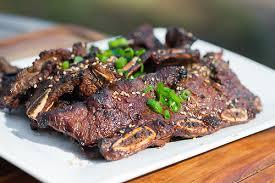
Everyone knows Korean barbecue, right? It looks like this, right?
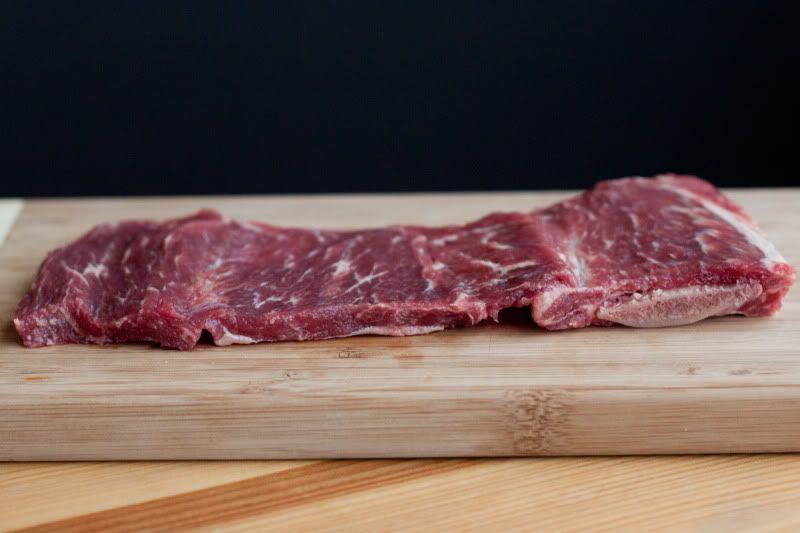
Well, this is called a “flanken cut” and was actually unheard of in traditional Korean cooking. In traditional galbi, the bone is cut about two inches long, separated into individual bones, and the meat is butterflied into a long, thin ribbon, like this:
In fact, the style of galbi with the bones cut short across the length is called “LA Galbi,” as in “Los Angeles-style.” So the “traditional Korean barbecue” is actually a Korean-American dish.
Now, here’s where things get interesting. You see, flanken-cut ribs aren’t actually all that popular in American cooking either. Where they are often used however, is in Mexican cooking, for tablitas.
So you have to imagine these Korean-American immigrants in 1970s Los Angeles getting a hankering for their traditional barbecue. Perhaps they end up going to a corner butcher shop to buy short ribs. Perhaps that butcher shop is owned by a Mexican family. Perhaps they end up buying flanken-cut short ribs for tablitas because that’s what’s available. Perhaps they get slightly weirded out by the way the bones are cut so short, but give it a chance anyway. “Holy crap this is delicious, and you can use the bones as a little handle too, so now galbi is finger food!” Soon, they actually come to prefer the flanken cut over the traditional cut: it’s easier to cook, easier to serve, and delicious, to boot!
Time goes on, Asian fusion becomes popular, and suddenly the flanken cut short rib becomes better known as “Korean BBQ,” when it actually originated as a Korean-Mexican fusion dish!
I don’t know that it actually happened this way, but I like to think it did.
Corned beef and cabbage as we know it today? That came to the Irish immigrants via their Jewish neighbors at kosher delis.
The Irish immigrants almost solely bought their meat from kosher butchers. And what we think of today as Irish corned beef is actually Jewish corned beef thrown into a pot with cabbage and potatoes. The Jewish population in New York City at the time were relatively new immigrants from Eastern and Central Europe. The corned beef they made was from brisket, a kosher cut of meat from the front of the cow. Since brisket is a tougher cut, the salting and cooking processes transformed the meat into the extremely tender, flavorful corned beef we know of today.
The Irish may have been drawn to settling near Jewish neighborhoods and shopping at Jewish butchers because their cultures had many parallels. Both groups were scattered across the globe to escape oppression, had a sacred lost homeland, discriminated against in the US, and had a love for the arts. There was an understanding between the two groups, which was a comfort to the newly arriving immigrants. This relationship can be seen in Irish, Irish-American and Jewish-American folklore. It is not a coincidence that James Joyce made the main character of his masterpiece Ulysses, Leopold Bloom, a man born to Jewish and Irish parents.
This week’s devastating IPCC report has brought the impending impacts of climate change, and just how far we are from meeting our goals to stop them, into crisp focus.
We earthlings have had to swallow some hard truths lately. The impending impacts of climate change, and just how far we are from meeting our goals to stop them, have been brought into crisp focus by not only major, intergovernmental reports but also the slew of dramatic weather events around the globe.
It can be easy to feel hopeless, like there’s nothing we can do to stop our species from obliterating the planet as we know it in less than a generation. But there’s one sect of people who think they have the answer and, if everyone would just get on board, could easily curb the effects of climate change. It’s called ecosocialism, and it’s exactly as radical as it sounds.
“Ecosocialism combines the ideas of ecology and socialism, meaning that you have a society without class divisions that lives in some kind of harmony or balance with nature,” Victor Wallis, author of Red-Green Revolution: The Politics and Technology of Ecosocialism, told me in a phone interview . “You can’t make the decisions necessary for the health of the environment on the basis of profit calculations.”
Ecosocialism first began to spread in the 1980s alongside environmentalism, though some scholars argue that the roots of this movement trace back to Karl Marx’s theories. The concept is basically that environmental protection is incompatible with capitalism, and the best (or, some would argue, only) way to fight climate change is to move towards a socialist society. Capitalism is always going to be driven towards producing and consuming more and more, which is a big part of how we got in this pickle to begin with.
Though proponents of the movement have trouble detangling the two ideologies, the overlap may not be immediately apparent to everyone. After all, there are profits to be made from the fight against climate change: think of renewable energy or electric cars. These industries don’t exist out of some corporate altruism, they exist because they’re profitable. And they’re growing rapidly—in 2017, more than 500,000 new jobs in renewable energy were created around the world, bringing the total number of people employed in the sector to 10 million, and $335.5 billion of new investments were made in the industry.
But ecosocialists argue even if some parts of capitalism can advance an environmental agenda, the rest of the market will still be working against it, and we’ll never get where we need to be.
“Unless you do away with capitalism, you’ll still have the other companies that are much more influential and bigger in scale, like oil companies,” Wallis said. “There is ultimately a clash in the wider scheme of things, even if you have one sector of a capitalist market that responds to people’s concerns about the environment.”
The other aspect of socialism that Wallis says meshes well with environmentalism is leveling the playing field. You may not like that your job at a coal mine contributes to climate change, but you still need to feed your family and pay your bills. If we could flatten out class structures so that was no longer a concern, more people would be able to participate in the changes we need to make.
But what does an eco socialist society even look like? Do we all live in vertical farms together, sharing crops and riding bicycles to power our light bulbs? Eric Holthaus, a meteorologist, reporter, and ecosocialist, told me it doesn’t have to be that dramatic of a shift.
“It’s not going to require everyone giving up all their possessions and living on a farm for the rest of their lives,” Holthaus said in a phone interview.
Holthaus argues that we have the technology to rapidly switch to a world that runs on carbon-free energy, but that won’t happen in the current structure because it doesn’t benefit those already at the top. He pointed to the fact that studies have shown just 100 companies are responsible for 71 percent of the world’s greenhouse gas emissions. If we created a government willing to strictly regulate these companies, it would make a drastic impact and open the door to a clean energy future.
This all sounds peachy, but it also sounds impossible, especially under the current climate-change-denying administration in the US. It doesn’t seem likely that we could make such a massive global shift in enough time to slow down this runaway train of destruction. While Wallis largely agreed, quipping that even though it’s highly unlikely, it’s “our only option,” Holthaus was a little more optimistic.
“Think of 30 years ago: 1988 was a very different world,” he said. “The example I always go back to is gay marriage. At one point, it felt impossible. It felt like an issue we would never change. But with a lot of people working behind the scenes and very publicly for decades, the political world switched within just a few years.”
Holthaus thinks we can see similar switches with climate change, as more people become aware of the dire straits we’re all in and decide, y’know, we’d like to stay on this planet for awhile.
And it’s not just a fringe movement. The US Green Party has embraced ecosocialismas a core tenant of its platform since 2016. Democratic socialism has seen a surge in popularity this year, including the election of Democratic Socialist Alexandria Ocasio-Cortez, who ousted a 10-term incumbent for a congressional seat in New York this summer. The Democratic Socialists of America organization has also adopted the ecosocialism philosophy and has an ecosocialism working group.




 Asknotbug's Tumblr Backup