i really love our generation’s joke trend of like, very calm but incredibly inflated hyperbole. like nobody says “oh she’s pretty” anymore we say “i would willingly let her murder me” and everyone is just like “lol same”
i think “same” is also great and “me,” i love when somebody reblogs a picture of like, a lizard, and just says “me” and we all know exactly what they mean. the current online Humor Discourse is remarkable because we trade exclusively in metaphors and implications and nobody ever, ever says anything outright and yet EVERYBODY understands each other perfectly
This reminds me of the time when I was on vacation with my family and we were hiking, and after using a rest stop, the conversation turned to the grossness of outhouses and port-a-potties, and I said that if I ever got splashback from a port-a-potty, “my soul would depart my body.” My parents found that hilarious, and my dad commented that my generation can be so clever with words bc he would only think to say something like “It would be disgusting” which doesn’t convey the sentiment nearly as well as “my soul would depart my body.”
I find this so intriguing because it opens up so many possibilities for future writers to connect with their readers.
Does that mean we’re literally “Darmok and Jalad”-ing language? We speak in stories and references and memes, never saying what’s actually going on, just making reference to other things.
I just did a quick perusal of the Coptic resources on this site, and it has all the resources I’ve personally found worthwhile and then some. These are resources that took me months, if not years, to discover and compile. I am thoroughly impressed. The other languages featured on the site are:
Akkadian
Arabic
Aramaic
Church Slavonic
Egyptian (hieroglyphics and Demotic)
Elamite
Ethiopic (Ge’ez)
Etruscan
Gaulish
Georgian
Gothic
Greek
Hebrew
Hittite
Latin
Mayan (various related languages/dialects)
Old Chinese
Old English
Old French
Old Frisian
Old High German
Old Irish
Old Norse
Old Persian
Old Turkic
Sanskrit
Sumerian
Syriac
Ugaritic
For the love of all the gods, if you ever wanted to learn any of these languages, use this site.
Latin has this word, sic. Or, if we want to be more diacritically accurate, sīc. That shows that the i is long, so it’s pronounced like “seek” and not like “sick.”
You might recognize this word from Latin sayings like “sic semper tyrannis” or “sic transit gloria mundi.” You might recognize it as what you put in parentheses when you want to be pass-agg about someone’s mistakes when you’re quoting them: “Then he texted me, ‘I want to touch you’re (sic) butt.’”
It means, “thus,” which sounds pretty hoity-toity in this modren era, so maybe think of it as meaning “in this way,” or “just like that.” As in, “just like that, to all tyrants, forever,” an allegedly cool thing to say after shooting a President and leaping off a balcony and shattering your leg. “Everyone should do it this way.”
Anyway, Classical Latin somewhat lacked an affirmative particle, though you might see the word ita, a synonym of sic, used in that way. By Medieval Times, however, sic was holding down this role. Which is to say, it came to mean yes.
Ego: Num edisti totam pitam?
Tu, pudendus: Sic.
Me: Did you eat all the pizza?
You, shameful: That’s the way it is./Yes.
This was pretty well established by the time Latin evolved into its various bastard children, the Romance languages, and you can see this by the words for yes in these languages.
In Spanish, Italian, Asturian, Catalan, Corsican, Galician, Friulian, and others, you say si for yes. In Portugese, you say sim. In French, you say si to mean yes when you’re contradicting a negative assertion (”You don’t like donkey sausage like all of us, the inhabitants of France, eat all the time?” “Yes, I do!”). In Romanian, you say da, but that’s because they’re on some Slavic shit. P.S. there are possibly more Romance languages than you’re aware of.
But:
There was still influence in some areas by the conquered Gaulish tribes on the language of their conquerors. We don’t really have anything of Gaulish language left, but we can reverse engineer some things from their descendants. You see, the Celts that we think of now as the people of the British Isles were Gaulish, originally (in the sense that anyone’s originally from anywhere, I guess) from central and western Europe. So we can look at, for example, Old Irish, where they said tó to mean yes, or Welsh, where they say do to mean yes or indeed, and we can see that they derive from the Proto-Indo-European (the big mother language at whose teat very many languages both modern and ancient did suckle) word *tod, meaning “this” or “that.” (The asterisk indicates that this is a reconstructed word and we don’t know exactly what it would have been but we have a pretty damn good idea.)
So if you were fucking Ambiorix or whoever and Quintus Titurius Sabinus was like, “Yo, did you eat all the pizza?” you would do that Drake smile and point thing under your big beefy Gaulish mustache and say, “This.” Then you would have him surrounded and killed.
Apparently Latin(ish) speakers in the area thought this was a very dope way of expressing themselves. “Why should I say ‘in that way’ like those idiots in Italy and Spain when I could say ‘this’ like all these cool mustache boys in Gaul?” So they started copying the expression, but in their own language. (That’s called a calque, by the way. When you borrow an expression from another language but translate it into your own. If you care about that kind of shit.)
The Latin word for “this” is “hoc,” so a bunch of people started saying “hoc” to mean yes. In the southern parts of what was once Gaul, “hoc” makes the relatively minor adjustment to òc, while in the more northerly areas they think, “Hmm, just saying ‘this’ isn’t cool enough. What if we said ‘this that’ to mean ‘yes.’” (This is not exactly what happened but it is basically what happened, please just fucking roll with it, this shit is long enough already.)
So they combined hoc with ille, which means “that” (but also comes to just mean “he”: compare Spanish el, Italian il, French le, and so on) to make o-il, which becomes oïl. This difference between the north and south (i.e. saying oc or oil) comes to be so emblematic of the differences between the two languages/dialects that the languages from the north are called langues d’oil and the ones from the south are called langues d’oc. In fact, the latter language is now officially called “Occitan,” which is a made-up word (to a slightly greater degree than that to which all words are made-up words) that basically means “Oc-ish.” They speak Occitan in southern France and Catalonia and Monaco and some other places.
The oil languages include a pretty beefy number of languages and dialects with some pretty amazing names like Walloon, and also one with a much more basic name: French. Perhaps you’ve heard of it, n’est-ce pas?
Yeah, eventually Francophones drop the -l from oil and start saying it as oui. If you’ve ever wondered why French yes is different from other Romance yeses, well, now you know.
I guess what I’m getting at is that when you reblog a post you like and tag it with “this,” or affirm a thing a friend said by nodding and saying “Yeah, that”: you’re not new
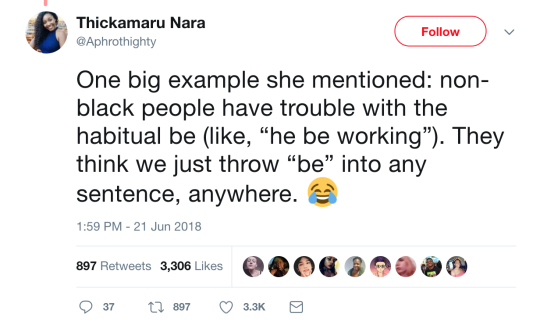
people understand that Spanish speakers speak different dialects of the Spanish language but don’t understand that black people speak a dialect of the English language
saw a variation of this conversation on twitter earlier
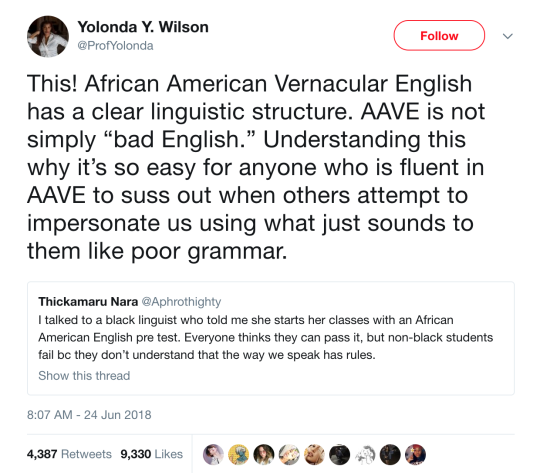
I just want to state for the record that this is completely uncontroversial among linguists. It’s the first day of sociolinguistics class.
I majored in Communication Disorders to become an Speech Language Pathologist and am currently and Assisstant. When we were in class we were taught about this as well as other dialect. Under no circumstances do you treat a client for what is considered a dialect. So as a speech therapist when I hear AAVE I move on. It is a real language with real rules.
Thats why it was outrage in the speech community post Katrina when teachers began to recommend students for speech, when it was simply the New Orleans dialect.
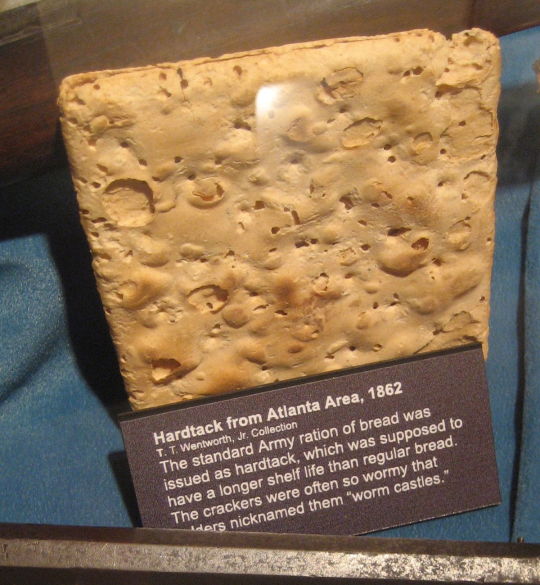
an edible cracker with just one side. mathematically impossible and yet here I am monching on it.
‘scuit’ comes from the french word for ‘bake’, ‘cuire’ as bastardized by adoption by the brittish and a few hundred years
‘biscuit’ meant ‘twice-baked’, originally meaning items like hardtack which were double baked to dry them as a preservative measure long before things like sugar and butter were introduced. if you see a historical doccument use the word ‘biscuit’ do not be fooled to think ‘being a pirate mustve been pretty cool, they ate nothing but cookies’ – they were made of misery to last long enough to be used in museum displays or as paving stones
‘triscuit’ is toasted after the normal biscuit process, thrice baked
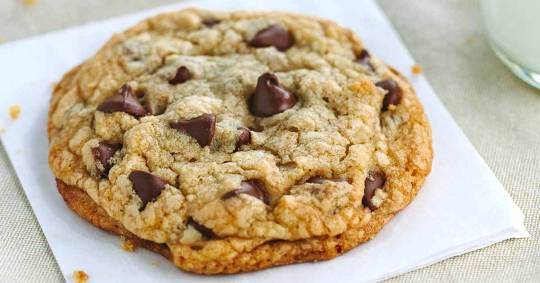
thus the monoscuit is a cookie thats soft and chewy because it was only baked once, not twice
behold the monoscuit/scuit
Why is this called a biscuit:
when brittish colonists settled in the americas they no longer had to preserve biscuits for storage or sea voyages so instead baked them once and left them soft, often with buttermilk or whey to convert cheap staples/byproducts into filling items to bulk out the meal to make a small amount of greasy meat feed a whole family. considering hardtack biscuits were typically eaten by dipping them in grease or gravy untill they became soft enough to eat without breaking a tooth this was a pretty short leap of ‘just dont make them rock hard if im not baking for the army’ but didnt drop the name because its been used for centuries and people forgot its french for ‘twice baked’ back in the tudor era, biscuit was just a lump of cooked dough that wasnt leavened bread as far as they cared
thus the buttermilk biscuit and the hardtack biscuit existed at the same time. ‘cookies’ then came to america via german and dutch immigrants as tiny cakes made with butter, sugar/molasses, and eggs before ‘tea biscuits’ as england knew them due to the new availability of cheap sugar- which is why ‘biscuit’ and ‘cookie’ are separate items in america but the same item in the UK
the evolution of the biscuit has forks on its family tree
I love it when a shitpost turns into an actually interesting post.
is “chai” a TYPE of tea??! bc in Hindi/Urdu, the word chai just means tea
its like spicy cinnamon tea instead of bland gross black tea
I think the chai that me and all other Muslims that I know drink is just black tea
i mean i always thought chai was just another word for tea?? in russian chai is tea
why don’t white people just say tea
do they mean it’s that spicy cinnamon tea
why don’t they just call it “spicy cinnamon tea”
the spicy cinnamon one is actually masala chai specifically so like
there’s literally no reason to just say chai or chai
They don’t know better. To them “chai tea” IS that specific kind of like, creamy cinnamony tea. They think “chai” is an adjective describing “tea”.
What English sometimes does when it encounters words in other languages that it already has a word for is to use that word to refer to a specific type of that thing. It’s like distinguishing between what English speakers consider the prototype of the word in English from what we consider non-prototypical.
(Sidenote: prototype theory means that people think of the most prototypical instances of a thing before they think of weirder types. For example: list four kinds of birds to yourself right now. You probably started with local songbirds, which for me is robins, blue birds, cardinals, starlings. If I had you list three more, you might say pigeons or eagles or falcons. It would probably take you a while to get to penguins and emus and ducks, even though those are all birds too. A duck or a penguin, however, is not a prototypical bird.)
“Chai” means tea in Hindi-Urdu, but “chai tea” in English means “tea prepared like masala chai” because it’s useful to have a word to distinguish “the kind of tea we make here” from “the kind of tea they make somewhere else”.
“Naan” may mean bread, but “naan bread” means specifically “bread prepared like this” because it’s useful to have a word to distinguish between “bread made how we make it” and “bread how other people make it”.
We also sometimes say “liege lord” when talking about feudal homage, even though “liege” is just “lord” in French, or “flower blossom” to describe the part of the flower that opens, even though when “flower” was borrowed from French it meant the same thing as blossom.
We also do this with place names: “brea” means tar in Spanish, but when we came across a place where Spanish-speakers were like “there’s tar here”, we took that and said “Okay, here’s the La Brea tar pits”.
Or “Sahara”. Sahara already meant “giant desert,” but we call it the Sahara desert to distinguish it from other giant deserts, like the Gobi desert (Gobi also means desert btw).
Languages tend to use a lot of repetition to make sure that things are clear. English says “John walks”, and the -s on walks means “one person is doing this” even though we know “John” is one person. Spanish puts tense markers on every instance of a verb in a sentence, even when it’s abundantly clear that they all have the same tense (”ayer [yo] caminé por el parque y jugué tenis” even though “ayer” means yesterday and “yo” means I and the -é means “I in the past”). English apparently also likes to use semantic repetition, so that people know that “chai” is a type of tea and “naan” is a type of bread and “Sahara” is a desert. (I could also totally see someone labeling something, for instance, pan dulce sweetbread, even though “pan dulce” means “sweet bread”.)
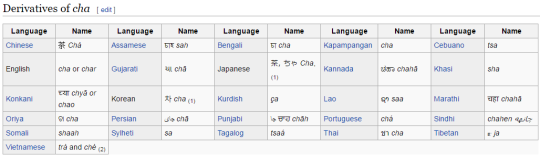
Also, specifically with the chai/tea thing, many languages either use the Malay root and end up with a word that sounds like “tea” (like té in Spanish), or they use the Mandarin root and end up with a word that sounds like “chai” (like cha in Portuguese).
So, can we all stop making fun of this now?
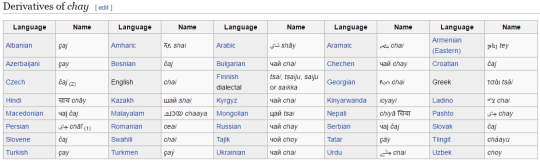
Okay and I’m totally going to jump in here about tea because it’s cool. Ever wonder why some languages call tea “chai” or “cha” and others call it “tea” or “the”?
It literally all depends on which parts of China (or, more specifically, what Chinese) those cultures got their tea from, and who in turn they sold their tea to.
The Portuguese imported tea from the Southern provinces through Macau, so they called tea “cha” because in Cantonese it’s “cha”. The Dutch got tea from Fujian, where Min Chinese was more heavily spoken so it’s “thee” coming from “te”. And because the Dutch sold tea to so much of Europe, that proliferated the “te” pronunciation to France (”the”), English (”tea”) etc, even though the vast majority of Chinese people speak dialects that pronounce it “cha” (by which I mean Mandarin and Cantonese which accounts for a lot of the people who speak Chinese even though they aren’t the only dialects).
And “chai”/”chay” comes from the Persian pronunciation who got it from the Northern Chinese who then brought it all over Central Asia and became chai.
This answered so many questions for me. Oddly enough fanfiction was responsible for a lot of said questions. Questions I would not of thought of otherwise.
Did you know that “cake”, “egg”, “fellow”, “gun”, “happy”, “husband” and many other words used in the English vocabulary is of Old Norse origin? The reason is the Viking colonization of eastern and northern England between 850 and 1100 AD. The Vikings quickly assimilated and brought with them an important gift: The rich and powerful Old Norse language.
Old Norse diverged into West Norse (Norway, Faroe Islands, Iceland, and Greenland) and East Norse (Denmark and Sweden). With some minor regional variations in loan words, both West Norse and East Norse are essentially the same. The Vikings who raided and later settled in Great Britain came mainly from Norway and Denmark.
Below you will find an alphabetical list of many common English words of Old Norse origin.
A
aloft – á (“=in, on, to”) + lopt (“=air, atmosphere, sky, heaven, upper floor, loft”)
anger – angr (“=trouble, affliction”); root ang (=”strait, straitened, troubled”); related to anga, plural öngur (=”straits, anguish”)
awe – agi (“=terror”)
are – merger of Old English (earun, earon) and Old Norse (er) cognates
awkward – the first element is from Old Norse öfugr (“=turned-backward”), the ‘-ward’ part is from Old English weard
Norman, Normandy – from Old Norse through Old French, meaning “northman”, due to Viking settlement in Normandy region.
O
oaf – alfr (=”elf”)
odd – oddi (=”third number”, “the casting vote”)
Odin – Óðinn
Ombudsman – from Old Norse umboðsmaðr through Swedish ombudsman, meaning “commissary”, “representative”, “steward”
outlaw – utlagi
P
plough, plow – plogr
R
Ragnarok – “Doom of the gods” or “Destiny of the gods”, from Norse mythology. Composed of words ragna, genitive of “the great powers”(regin), and rǫk (later rök) “destiny, doom, fate, end”.
scale – (for weighing) from skal (=”bowl, drinking cup”, or in plural “weighing scale” referring to the cup or pan part of a balance) in early English used to mean “cup”
scant – skamt & skammr (=”short, lacking”)
scare – skirra (=”to frighten)
scarf – skarfr (=”fastening joint”)
scathe – skaða (=”to hurt, injure”)
score – skor (=”notch”; “twenty”)
scrape – skrapa (=”to scrape, erase”)
scrap – skrap (=”scraps, trifles”) from skrapa
seat – sæti (=”seat, position”)
seem – sœma (=”to conform”)
shake – skaka (=”to shake”)
skate – skata (=”fish”)
skid – probably from or related to Old Norse skið (=”stick of wood”) and related to “ski” (=”stick of wood”, or in this sense “snowshoe”)
skill – skil (=”distinction”)
skin – skinn (=”animal hide”)
skip – skopa (=”to skip, run)
skirt – skyrta (=”shirt”)
skull – skulle (=”head”)
sky – ský (=”cloud”)
slant – sletta, slenta (=”to throw carelessly”)
slaughter – slahtr (=”butchering”)
slaver – slafra (=”slaver”)
sledge – sleggja (=”sledgehammer”)
sleight – slœgð
sleuth – sloð (=”trail”)
sly – sloegr (=”cunning, crafty, sly”)
snare – snara (=”noose, snare”)
snub – snubba (=”to curse”)
sprint – spretta (=”to jump up”)
stagger – stakra (=”to push”)
stain – steina (=”to paint”)
stammer – stemma (=”to hinder, damn up”)
steak – steik, steikja (=”to fry”)
sway – sveigja (=”to bend, swing, give way”)
T
take – taka
tarn – tjörn, tjarn
their – þierra
they – þeir
thorp – þorp
though – from Old English þēah, and in part from Old Norse þó (=”though”)
thrall – þræll
Thursday – Þorsdagr (=”Thor’s day”)
thrift – þrift (=”prosperity”)
thrust – þrysta (=”to thrust, force”)
thwart – þvert (=”across”)
tidings – tíðindi (=”news of events”)
tight – þéttr (=”watertight, close in texture, solid”)
till -til (=”to, until”)
troll – troll (=”giant, fiend, demon”; further etymology is disputed)
trust – traust (=”help, confidence”)
U
ugly – uggligr (=”dreadful”)
until – from Old Norse und (=”as far as, up to”) and til (=”until, up to”).
V
Vanadium – from Old Norse Vanadis, another name for Freja
Viking – viking, “one who came from the fjords
W
wand – vondr (=”rod”)
want – vanta (=”to lack”)
weak – veikr (=”weak, pliant”)
whirl – hvirfla (=”to go around”)
whisk – viska (=”to plait”)
wight – vigr (=”able in battle”) – the other wight meaning “man” is from Old English
wile – vél (=”trick, craft, fraud”)
window – vindauga (=”wind-eye”) – although gluggi was more commonly used in Old Norse
Make a Vampire character who’s lived through several waves of the common language’s development and can’t let go if certain gramatical habbits from different time eras.
So like, thou ist a horrid creature, an absolute cur, but go off i guess
… can i use that phrase irl?
Absolutely you can and I encourage more uses of similar phrases that just completely fuck up the chronology of the english langauge. I wanna hear 15th century english mixed with surfer speak mixed with current age internet lingo like all the time.
Like this? Well my dude, seems like a weasel hath not such a deal of splean as you’re toss’d with. Chill already, you’re not valid.
You are an unrighteous, bastardly gullion. Heaven truly
knows that thou art false as hell. When you die, I will face God and walk
backwards into hell just so that I can beat your ass in the afterlife too.
I love the idea of a vampire who’s language travels back in time as they get pissed.
I grieve for thee in these trying times. Alexa play Despacito